



Every once in a while, I pick up a book because I want to understand something better. And every once in a while, that book feels like a bowl of plain oatmeal where it is nutritious and necessary but absolutely not something you read for the plot. Artificial Intelligence for Dummies (3rd Edition) is exactly that kind of book. It’s not trying to charm you. It’s trying to explain things. Thoroughly and methodically. Occasionally with the enthusiasm of a tax form.
But here’s the thing: it’s useful. Really useful. Especially if you’re someone who keeps hearing the word “AI” and wonders when exactly the robots arrived and why they suddenly want to write your emails.
Who This Book Is For
The authors are John Paul Mueller, Luca Massaron, and Stephanie Diamond who wrote this book for people who want to understand AI without needing a PhD, a math minor, or a tolerance for jargon that sounds like it was generated by a malfunctioning blender. It’s for:
Curious beginners
Professionals who need to sound competent in meetings
Parents whose kids ask, “Is AI going to take over the world”
Anyone who wants to understand why AI is suddenly everywhere, even though it’s been around since before the internet had colors
If you’ve ever said, “Explain it to me like I’m smart, but tired,” this book is for you.

The Big Surprise: AI Is Not New
One of the most grounding takeaways from the book is that AI didn’t appear in 2023 like a dramatic plot twist. The authors walk through the history of AI from early symbolic logic systems to neural networks that were considered cutting‑edge back when floppy disks were still a thing.
The book’s early parts (“Introducing AI” and “Understanding How AI Works”) do a great job of reminding you that humans have been trying to teach machines to think for decades. We’re not living in a sudden sci‑fi future. We’re living in the long, slow, slightly awkward adolescence of a field that’s been growing up for 70 years.
Key Learnings
1. AI is a toolbox, not a magic trick
The book breaks AI into understandable areas: machine learning, deep learning, natural language processing, robotics, expert systems. Each chapter is like a tour guide saying, “Here’s what this tool does. Here’s what it doesn’t do. Please don’t feed it unrealistic expectations.”
It is just as important to define what AI is NOT as to define what AI is and can be.
2. Machine learning is basically pattern recognition with better branding
The middle chapters walk through supervised learning, unsupervised learning, reinforcement learning, and neural networks. Yes, it gets a little dry. (OK, a LOT dry). But it’s also clarifying. You start to see that most AI is just math wearing a fancy coat.
3. Data is the real star of the show
The authors hammer this point home: AI is only as good as the data it’s trained on. If the data is messy, biased, or incomplete, the AI will be too. This is the part where you realize that the future is less “robots taking over” and more “humans cleaning spreadsheets forever.”
4. AI ethics is not optional
The later chapters (“Getting Philosophical About AI” and “The Part of Tens”) highlight the ethical questions from bias, privacy, transparency to accountability. It’s not fear mongering. It’s more like a gentle nudge: “Hey, maybe we should think about this before we hand the robots the keys.”
5. You don’t need to understand the math to understand the impact
The authors do include formulas, diagrams, and enough technical detail to make your high school algebra teacher proud. So fair warning! But they also reassure you that you can skip the math and still walk away with a solid understanding of how AI works.
Is the Book Dry? Yes. Is It Worth Reading? Also Yes.
This isn’t a book you curl up with on a rainy afternoon unless you’re the kind of person who finds comfort in flowcharts. But it is the kind of book that leaves you feeling grounded instead of overwhelmed. It demystifies AI. It slows the conversation down. It reminds you that behind every “revolutionary breakthrough” is a long history of trial, error, and humans trying to make computers less confused.
And honestly, that’s refreshing.
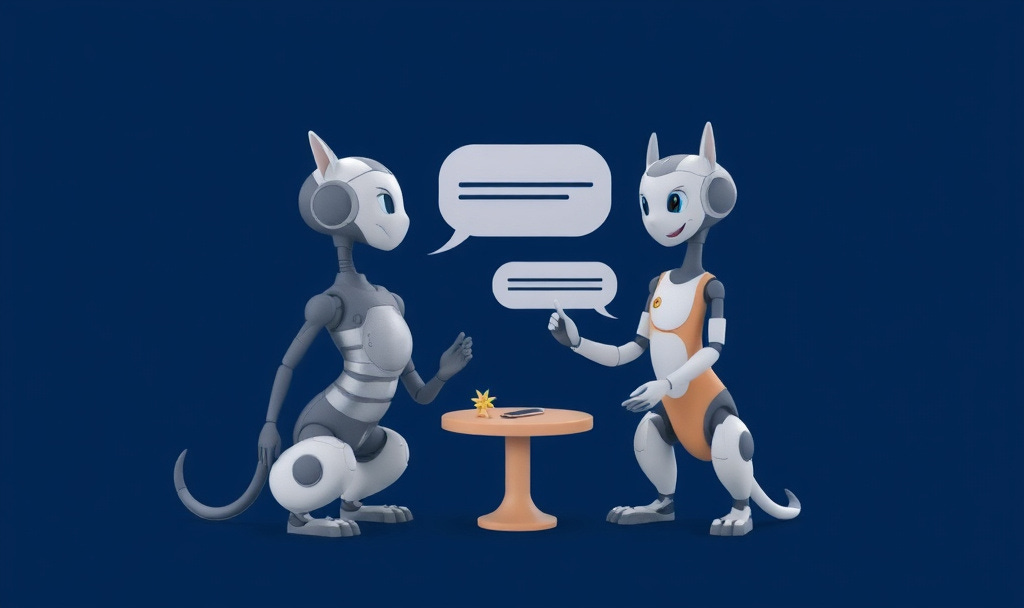
AI reviews Artificial Intelligence for Dummies
I thought it appropriate to ask various AI chat models to provide a blurb for the book in their own voice. While every model cited Amazon as a source, their callouts were different likely due to the training and weights of their particular AI model.
What makes this particularly valuable is its coverage of real-world applications—everything from self-driving cars and drones to medical field innovations—while also addressing the misconceptions that often cloud discussions about AI. The inclusion of tips on using generative AI ethically and effectively feels especially relevant given current debates around AI usage.
- Claude 4.5 SonnetWhat I like is the balance it strikes between “here’s how the magic works” (data pipelines, model training, the usual suspects) and “here’s how you can use the magic today”—think practical tips for ChatGPT, image generators, and the like, with a nod to doing it all ethically.
- Kimi K2It is future-focused but practical: It balances a primer on using AI in your everyday life with a broader look at where humanity is headed, touching on the ethical and societal questions that business leaders and non-technical professionals need to understand.
- Gemini 3 Pro (Preview)It dives into the essentials, explaining how AI systems really function through hardware, software, and the pivotal role of data in building intelligence, while addressing past failures and common misconceptions.
- Grok 4I also like that it doesn’t treat AI as pure success-story tech—it acknowledges past failures and ongoing challenges, then connects the concepts to practical, real-world uses (and common misconceptions) so you come away with a grounded mental model, not just buzzwords.
- ChatGPT 5.2
Final Thoughts
If you want a hype free, panic free, jargon light introduction to AI, Artificial Intelligence for Dummies (3rd Edition) is a solid place to start. It won’t entertain you, but it will educate you. And sometimes that’s exactly what we need, especially in a world where AI feels like it showed up overnight and started rearranging the furniture!
This book reminds you that AI didn’t appear suddenly. It grew slowly and steadily. Much like the rest of us.
Resources
 - Artificial Intelligence for Dummies (3rd Edition) on Wiley
 - Artificial Intelligence for Dummies Cheat Sheat
As You Find Me (AYFM) is where Brad Hachez - a visionary neurodivergent creator - explores tech, faith, health, & life. Join the journey to streamline productivity, deepen relationships, & reflect on purpose with resilience, presence, and servant-hearted growth.