


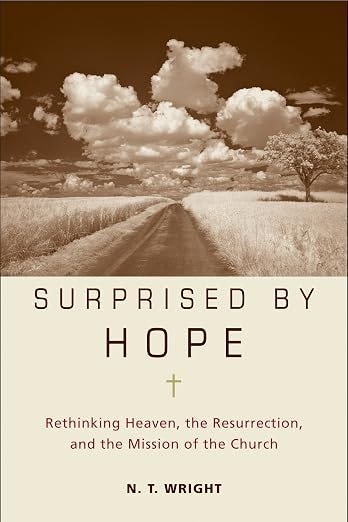
I picked up Surprised by Hope the way you pick up most books that find their way into your hands through someone else’s recommendation. A friend mentioned it. I put it on the list. It sat there for a while. Then one evening I actually opened it, and I did not put it down the same person who had picked it up.
N.T. Wright is a New Testament scholar and former Anglican bishop who has spent decades doing the kind of careful, patient work that most of us rely on without realizing it. This book is his attempt to bring that work down to ground level, to ask what Christians actually believe about what happens after we die, and whether we have the story straight.
His answer, delivered with a lot of grace and some pointed honesty, is that most of us do not.
The version of heaven that lives in the popular imagination, the clouds and harps and floating disembodied souls finally free from the mess of physical life, turns out to owe more to Plato than to Paul. Wright walks through the early Christian writings and shows that the first followers of Jesus expected something more specific and stranger and frankly better than the version that has settled into common understanding. They expected bodily resurrection. They expected God to renew the physical world rather than discard it. They expected, as Wright puts it, not just life after death but life after life after death.
That phrase stayed with me for days.
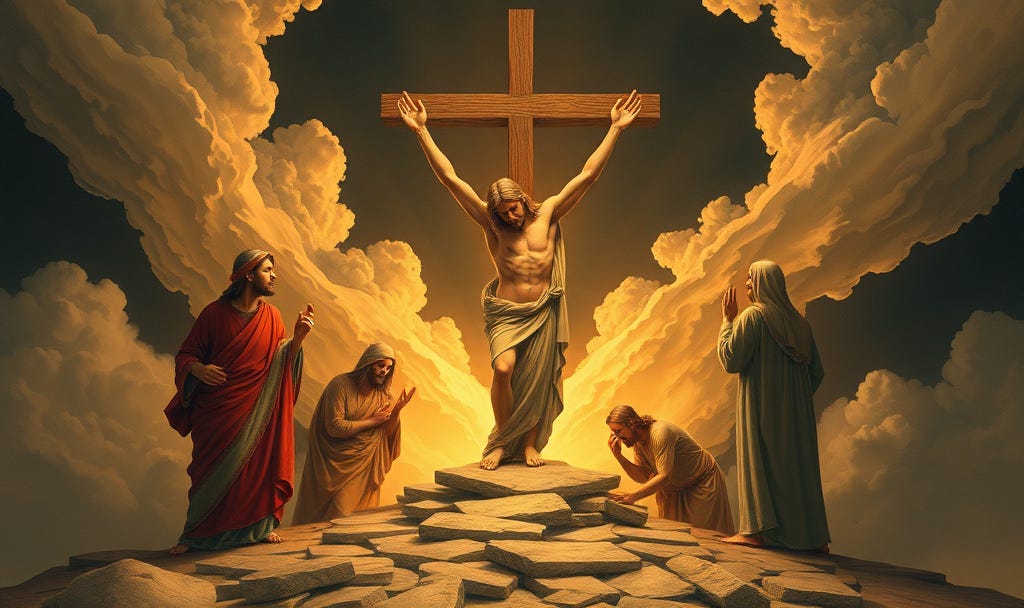
The first section of the book makes a careful historical and theological case for the resurrection of Jesus as a real event, not a metaphor or a spiritual experience or a legend that accumulated over time. Wright is persuasive here in the way that only someone who has thought about something for decades can be. He does not bully the reader. He builds the case slowly and lets it land.
The middle section is where things got genuinely new for me. Wright reframes what we are actually waiting for as Christians. Not escape from the earth. Not souls finally sprung from their physical prisons. The renewal of everything, the earth included. The resurrection of Jesus was not a one-time miracle but the beginning of something that will one day include all of creation. That framing changes the stakes considerably.
It also changes what we do in the meantime, which is where the third section comes in. If God intends to restore and renew the physical world, then the work of justice and healing and care for creation is not a distraction from the gospel. It is part of what the gospel is pointing toward. What we do now matters. Not because we are building the kingdom on our own, but because we are participating in something that will last.
I will be honest that parts of the third section felt like they wandered more than the first two. Wright has opinions about economics and politics that show up in ways that not every reader will follow him on. It did not undo the book for me, but I noticed it.
What stayed with me was something simpler. I had carried a vague picture of heaven my whole life without examining it much. It was comfortable the way a piece of furniture you have had so long becomes invisible. Wright made me look at it again. What I found when I did was that the real thing, the hope that runs through the New Testament, is larger and more grounded and more connected to this actual life than the furniture version had been.
That is worth the price of the book right there.
If you are someone who has wondered what Christians actually mean when they talk about hope, or if you are a believer who wants to hold that hope with more substance and less fog, this is the one to read. It is not a quick read. Wright writes with the thoroughness of someone who has earned his conclusions. But it rewards the effort in the way that things do when they shift something inside you that you did not know needed shifting.
My liver survived a health crisis last year. I am still figuring out what ordinary life is supposed to look like on the other side of that. Reading Wright reminded me that ordinary life is not a waiting room for something better. It is the ground where most of what matters actually happens. And it is connected, in ways I am still working out, to something that does not end.
That is good news. Even when it surprises you.
As You Find Me (AYFM) is where Brad Hachez - a visionary neurodivergent creator - explores tech, faith, health, & life. Join the journey to streamline productivity, deepen relationships, & reflect on purpose with resilience, presence, and servant-hearted growth.