


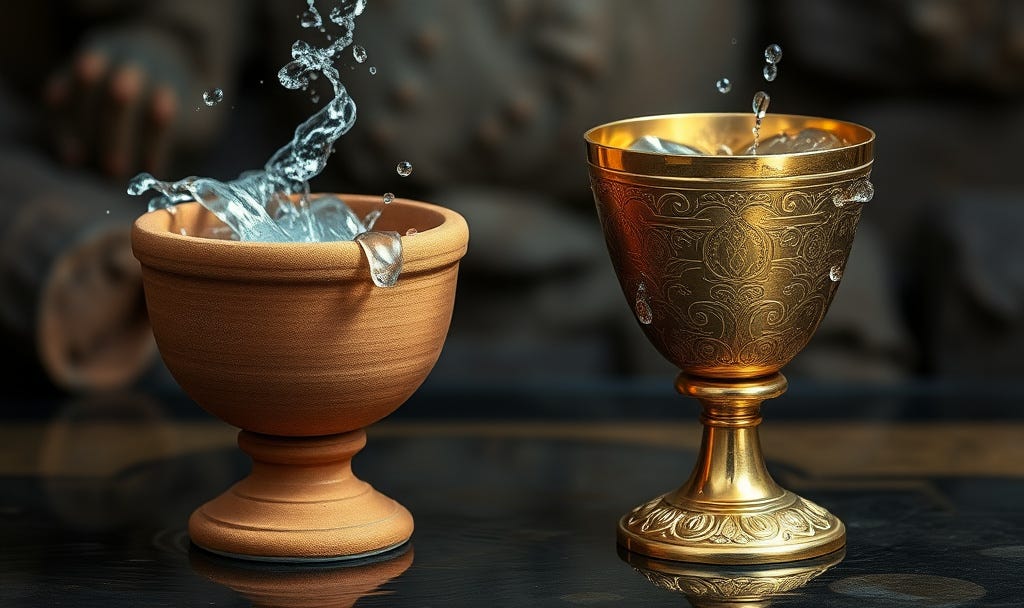
I have walked through life and have not always been grateful. When we practice gratitude, we shift our focus from what is missing to what is already present. This simple act transforms scarcity into sufficiency, turning ordinary moments into sources of joy.
In a quiet village, there lived a potter named Liora who made cups for everyone. Her cups were simple, yet strong, and the villagers used them daily for water, tea, and wine.
One day, a traveler arrived, weary from the road. He carried a golden chalice encrusted with jewels. The villagers admired it, but the traveler frowned.
“This chalice is heavy,” he said. “It never feels full, no matter how much I drink.”
Gratitude grounds us in humility, reminding us that much of what sustains us from love, breath, sunlight and friendship cannot be earned or bought. It strengthens relationships, because appreciation builds trust and warmth where entitlement erodes them. And it nurtures resilience, helping us endure hardship by revealing hidden gifts even in struggle.
Curious, Liora offered him one of her clay cups. The traveler scoffed, “Why would I trade gold for dirt?” But his thirst was great, so he drank from it anyway.
To his surprise, the water tasted sweeter. The cup was light in his hand, and though it held less than his chalice, he felt satisfied.
The traveler asked, “Why does this humble cup give me more than my treasure?”
Liora smiled:
“Gratitude is the hand that lifts the cup. Without it, even gold feels empty. With it, even clay overflows.”
From that day, the traveler carried both vessels. The chalice reminded him of wealth, but the clay cup reminded him of gratitude. And whenever he drank with a thankful heart, he found himself full.
In essence, gratitude is the quiet alchemy that turns life’s clay into gold. It doesn’t change our circumstances, but it changes us. It makes us more attentive, more generous, and more alive to the sacred middle of our days.
Ponder This:
How does practicing gratitude shift the way we interpret challenges or setbacks in life?
Can you recall a time when gratitude helped you see hidden value in a difficult situation?
In what ways does expressing gratitude strengthen bonds between people—whether in family, friendships, or community?
What are some subtle forms of gratitude (beyond saying “thank you”) that you’ve experienced or offered?
What small ritual could you create to remind yourself to notice and appreciate the “enough” in your day?
How might gratitude change not just how we feel, but how we act in the world?